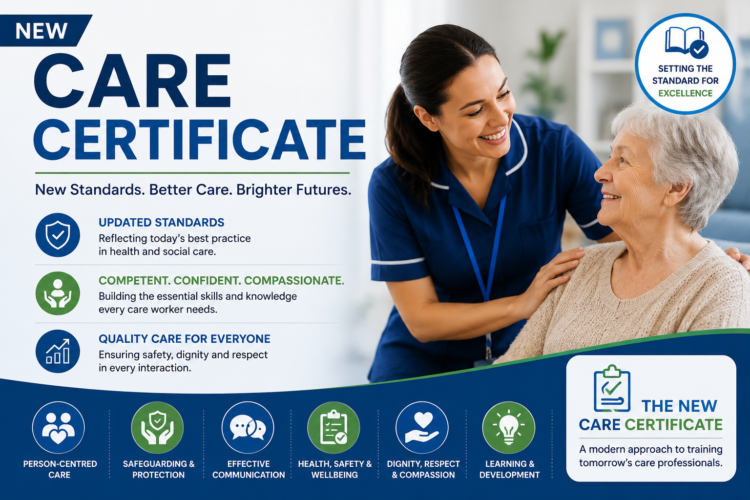
The health and social care sector is built on trust, safety, and high-quality service delivery. To maintain these standards, proper training for care workers is essential. The new Care Certificate has been introduced as an updated framework designed to ensure that all new staff possess the fundamental skills and knowledge required for their roles. It acts as a benchmark for excellence, helping both employers and employees maintain consistency across care settings. Whether in residential homes, hospitals, or community care, this certificate ensures that workers are prepared to deliver safe and compassionate care. As the sector continues to evolve, understanding the purpose and structure of the new Care Certificate is increasingly important. This article explores what the certificate involves, why it was updated, and how it supports the development of a competent and confident care workforce.
What Is the New Care Certificate?
The new Care Certificate is a standardized training framework designed for individuals starting work in health and social care. It outlines the essential knowledge, skills, and behaviours that care workers must demonstrate before they can perform their duties without supervision. Introduced to improve consistency across the sector, the updated certificate reflects current care standards and regulatory expectations. It ensures that all new staff begin their roles with a solid foundation in safe and effective care practices.
Key Components of the New Care Certificate
The framework covers a wide range of core topics that are critical to delivering quality care. These include communication, safeguarding, duty of care, and infection prevention. The updated version places stronger emphasis on real-world application, ensuring that learners can demonstrate competence in practical settings.
Core Areas Covered:
- Communication skills in care environments
- Safeguarding adults and children
- Duty of care responsibilities
- Infection prevention and control
- Person-centred care approaches
- Health and safety awareness
This structured approach ensures that all care workers are trained to a consistent standard, regardless of their workplace.

How the New Care Certificate Is Assessed
Unlike purely academic qualifications, the new Care Certificate focuses heavily on workplace assessment. Learners must demonstrate their competence through observation and practical tasks. This ensures that knowledge is not only understood but effectively applied in real care situations. Assessors evaluate performance based on specific criteria, ensuring that each standard is met before certification is awarded.
Comparison: Old vs New Care Certificate
|
Aspect |
Previous Version |
New Care Certificate |
|
Focus |
Knowledge-based |
Practical competency-based |
|
Assessment Method |
Mixed |
Workplace observation-focused |
|
Alignment with Standards |
Limited updates |
Fully aligned with current policies |
|
Learning Approach |
Theoretical emphasis |
Real-world application |
|
Consistency |
Variable across providers |
Standardized nationwide |
This comparison highlights how the updated certificate improves both training quality and consistency across the sector.
Why the New Care Certificate Matters
The introduction of the new Care Certificate plays a vital role in improving care standards. It ensures that all workers begin their roles with the same foundational skills, reducing variation in care quality. For employers, it provides a clear framework for training and assessment, helping meet compliance and regulatory requirements. For employees, it builds confidence and competence, supporting career progression within the sector. Ultimately, it contributes to safer, more effective, and person-centred care for individuals who rely on these services.
[FAQ SECTION]
- What is the purpose of the new Care Certificate?
It ensures that all new care workers meet a consistent standard of skills and knowledge before working independently. - Who needs to complete the Care Certificate?
It is required for new staff in health and social care roles, including support workers and healthcare assistants. - How long does it take to complete the Care Certificate?
Most individuals complete it within approximately 12 weeks, depending on their role and progress. - Is the Care Certificate a formal qualification?
No, it is a set of standards rather than a formal qualification, but it is widely recognized across the sector. - What makes the new Care Certificate different?
It focuses more on practical skills and workplace competence, ensuring care workers can apply their knowledge effectively.
Care Certificate Standards
In the health and social care industry, maintaining consistent standards is essential to ensure safe and effective service delivery. Care certificate standards were developed to provide a clear and structured approach to training new care workers, ensuring they meet a nationally recognized level of competence. These standards cover a wide range of essential topics, from communication and safeguarding to health and safety and person-centred care. By focusing on both theoretical understanding and practical application, they help bridge the gap between knowledge and real-world care delivery. The importance of care certificate standards has grown as the sector continues to evolve, with increasing demand for skilled and compassionate professionals. For employers, implementing these standards helps create a reliable and competent workforce, while for employees, they offer a pathway for development and career progression. This article explores the structure, purpose, and impact of care certificate standards, providing a comprehensive overview for anyone seeking to understand their role in modern health and social care.
What Are Care Certificate Standards?
Care certificate standards are a set of nationally recognized guidelines that define the essential competencies required for individuals working in health and social care roles. They were introduced to ensure that all new care workers receive consistent training and are capable of delivering safe, effective, and compassionate care. These standards typically form part of an induction process and must be completed before staff can work without supervision. By establishing a clear baseline, they help reduce variation in care quality and promote a shared understanding of best practices across the sector.
Key Areas Covered by Care Certificate Standards
The standards cover a broad range of topics that reflect the core responsibilities of care workers. Each area is designed to address a specific aspect of care delivery, ensuring that staff are well-prepared for the challenges of their role.
Core Topics Include:
- Communication in care settings
- Safeguarding adults and children
- Duty of care and ethical responsibilities
- Infection prevention and control
- Health and safety practices
- Person-centred care approaches
- Privacy, dignity, and respect
These topics ensure that care workers develop both the technical knowledge and interpersonal skills needed to provide high-quality support.
How Care Certificate Standards Are Assessed
Assessment of care certificate standards focuses on practical competence within the workplace. Rather than relying solely on written tests, learners must demonstrate their ability to apply knowledge in real-life situations. This includes observed tasks, discussions with assessors, and completion of relevant documentation. The goal is to ensure that care workers can perform their duties safely and confidently. This hands-on approach strengthens learning outcomes and ensures that standards are consistently met across different care environments.
Overview of Care Certificate Standards Framework
|
Standard Area |
Description |
|
Communication |
Effective interaction with individuals and teams |
|
Safeguarding |
Protecting vulnerable people from harm |
|
Duty of Care |
Understanding responsibilities and accountability |
|
Infection Control |
Preventing the spread of illness |
|
Health and Safety |
Maintaining a safe working environment |
|
Person-Centred Care |
Supporting individual needs and preferences |
|
Privacy and Dignity |
Respecting rights and confidentiality |
This structured framework helps both learners and employers understand expectations clearly and track progress effectively.
Importance of Care Certificate Standards in Practice
Care certificate standards are essential for maintaining high-quality care across the health and social care sector. They provide a consistent benchmark that ensures all workers meet the same fundamental requirements. For employers, this reduces risk and supports compliance with regulatory expectations. For care workers, it builds confidence and competence, enabling them to deliver safe and compassionate care. As the sector continues to grow and evolve, these standards play a vital role in supporting workforce development and improving outcomes for individuals receiving care.
[FAQ SECTION]
- What are care certificate standards?
They are a set of guidelines outlining the essential skills, knowledge, and behaviours required for care workers in health and social care. - Who needs to complete care certificate standards?
New care workers, including healthcare assistants and support staff, are typically required to complete them. - How are care certificate standards assessed?
They are assessed through workplace observation, practical tasks, and discussions with assessors. - Are care certificate standards mandatory?
While not a formal qualification, they are widely expected by employers and considered best practice across the sector. - How long does it take to complete care certificate standards?
Most individuals complete them within approximately 12 weeks, depending on their role and pace of learning.
The 16 Care Certificate Standards
These form the foundation of training for new health and social care workers in the UK. They outline the essential knowledge, skills, and behaviours required to deliver safe, effective, and compassionate care.
- Understand Your Role
Covers job responsibilities, boundaries, and expectations within a care setting. - Your Personal Development
Focuses on learning, reflection, and continuous professional growth. - Duty of Care
Ensures workers understand their responsibility to provide safe and ethical care. - Equality and Diversity
Promotes inclusive care that respects differences and individual rights. - Work in a Person-Centred Way
Emphasises supporting individuals based on their unique needs and preferences. - Communication
Develops effective communication skills with individuals, families, and colleagues. - Privacy and Dignity
Ensures respect for individuals’ personal space, choices, and confidentiality. - Fluids and Nutrition
Covers the importance of proper hydration and nutrition in care. - Awareness of Mental Health, Dementia, and Learning Disabilities
Builds understanding of different conditions and how to support individuals. - Safeguarding Adults
Focuses on protecting vulnerable adults from abuse or harm. - Safeguarding Children
Ensures awareness of how to protect children in care environments. - Basic Life Support
Teaches essential emergency procedures, including CPR. - Health and Safety
Covers safe working practices and risk management. - Handling Information
Focuses on data protection, confidentiality, and record-keeping. - Infection Prevention and Control
Teaches how to reduce the spread of infections. - Awareness of Learning Disability and Autism (sometimes integrated with Standard 9 depending on framework updates)
Enhances understanding of supporting individuals with diverse needs.
Key Takeaway
These standards ensure that all care workers start with a consistent level of competence. They are typically completed during induction and assessed in the workplace to confirm both knowledge and practical ability.
I am text block. Click edit button to change this text. Lorem ipsum dolor sit amet, consectetur adipiscing elit. Ut elit tellus, luctus nec ullamcorper mattis, pulvinar dapibus leo.